Designing Luxury Primary Bathrooms in Massachusetts Homes
Designing Luxury Primary Bathrooms in Massachusetts Homes
Introduction
A luxury primary bathroom should feel calm, restorative, and beautifully integrated into the architecture of the home. In Massachusetts, where long winters and busy routines make comfort essential, the primary bathroom has become one of the most valued spaces in the house. It is no longer just functional—it is a private retreat.
The most successful luxury primary bathroom design in Massachusetts balances spa-level comfort with durability suited to New England’s climate. Heated floors, generous showers, elegant vanities, layered lighting, and high-quality materials all play a role. At PNB Interior Design, Inc., we approach each bathroom renovation with careful attention to layout, proportion, and architectural integrity, ensuring the result feels timeless rather than trendy.
Defining Luxury in a Massachusetts Context
Luxury does not mean oversized or excessive. It means thoughtful planning, quality craftsmanship, and materials that age gracefully. In Massachusetts homes—particularly Colonials, Victorians, and historic properties—bathroom renovations must respect the character of the architecture while delivering modern performance.
Luxury in this context includes:
- Seamless layouts with clear circulation
- High-end but durable materials
- Intelligent storage solutions
- Warm, flattering lighting
- Climate-conscious comfort features
Even in modestly sized homes, intentional design choices can create a spacious and serene atmosphere.
Smart Layout Planning
Creating Functional Zones
One hallmark of a well-designed primary bathroom is the separation of zones. Organizing the room into wet and dry areas enhances comfort and efficiency.
- Wet zone: Shower and tub
- Dry zone: Vanities and storage
- Private zone: Toilet area, ideally enclosed
Separating these areas prevents congestion and allows multiple people to use the space simultaneously. In older Massachusetts homes where bathrooms may be compact, strategic reconfiguration—such as borrowing space from a closet—can dramatically improve function without altering the home’s exterior.
Showers Designed for Comfort and Impact
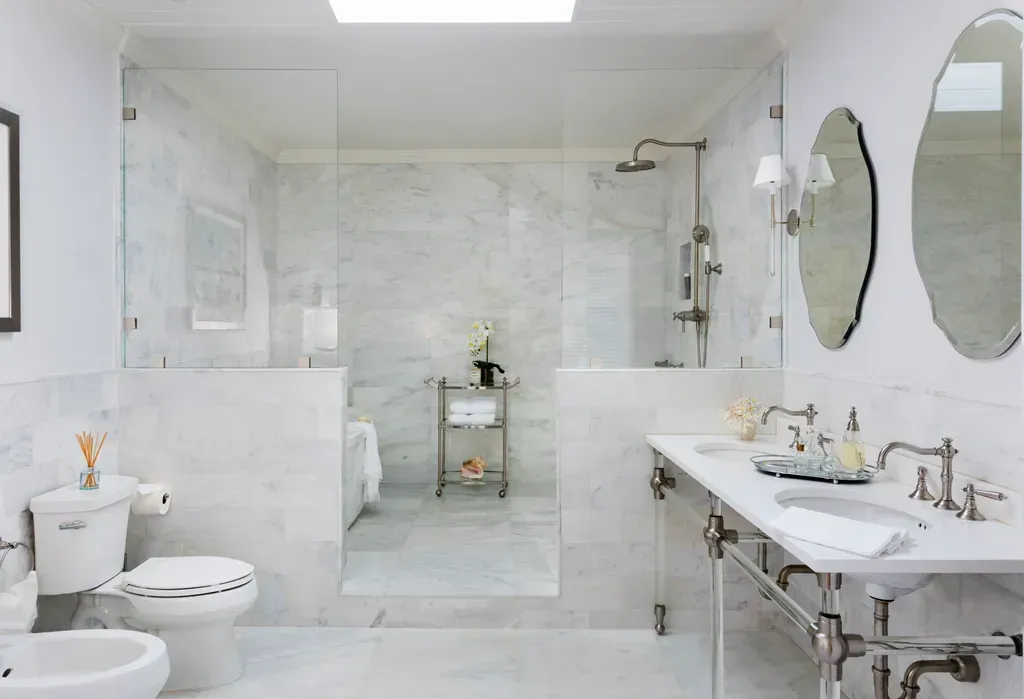
Walk-in showers are central to luxury bathroom design.
Key Features
- Frameless glass enclosures for visual openness
- Oversized tiles to reduce grout lines
- Linear drains for a seamless floor transition
- Built-in niches for storage
- Multiple showerheads for flexibility
In colder climates, heated flooring extending into the shower area eliminates the shock of stepping onto cold tile during winter mornings. Bench seating within the shower adds both convenience and a spa-like touch.
Material selection is equally important. Porcelain tile offers durability and low maintenance, while marble introduces timeless elegance. The choice should reflect both aesthetic preference and lifestyle needs.
Freestanding Tubs as Architectural Statements
A freestanding soaking tub serves as both functional feature and sculptural element. Positioned thoughtfully—often near a window—it becomes a focal point in the room.
Massachusetts homeowners often favor:
- Classic cast iron tubs for traditional homes
- Contemporary stone resin designs for modern interiors
- Acrylic options for easier installation in upper floors
Structural planning is critical in older homes to ensure floors can support the weight. Plumbing must be coordinated carefully to maintain clean lines.
Vanity Design and Storage Planning
A double vanity is common in primary bathrooms, but layout matters more than size. Proper spacing between sinks prevents crowding and enhances usability.
Essential Storage Features
- Deep drawers instead of lower cabinets
- Built-in organizers for cosmetics and grooming tools
- Electrical outlets concealed inside drawers
- Linen towers for towels and bulk storage
In Massachusetts Colonials, painted cabinetry in warm whites, muted blues, or soft grays complements traditional trim. In transitional homes, natural wood tones such as oak or walnut introduce warmth.
Countertop choices often include quartz for durability or marble for classic appeal. Selecting finishes that coordinate with adjacent bedrooms ensures visual continuity.
Flooring for Style and Durability
Bathroom flooring must withstand humidity and daily wear.
- Porcelain tile: Extremely durable and water-resistant
- Marble mosaic: Elegant and slip-resistant
- Natural stone: Timeless but requires maintenance
Radiant heating beneath tile flooring is one of the most appreciated upgrades in Massachusetts homes. It enhances comfort during winter and helps dry surfaces quickly, protecting finishes.
Lighting for Beauty and Function
Layered lighting transforms a bathroom from utilitarian to luxurious.
- Ambient lighting: Recessed fixtures or flush mounts
- Task lighting: Vertical sconces flanking mirrors to eliminate shadows
- Accent lighting: LED strips beneath floating vanities
- Decorative fixtures: Small chandeliers or pendants in larger bathrooms
Warm white bulbs between 2700K and 3000K provide flattering illumination. High color rendering ensures accurate makeup application and enhances natural materials.
Dimmers add flexibility, allowing bright light in the morning and softer illumination in the evening.
Climate-Conscious Comfort Features
Massachusetts winters demand thoughtful heating and ventilation.
- Radiant heated floors
- Towel warmers
- Insulated exterior walls
- High-capacity exhaust fans with humidity sensors
Proper ventilation prevents moisture buildup, protecting cabinetry, paint, and tile over time.
Sustainable Luxury
Many homeowners prioritize environmentally responsible design.
- Low-flow showerheads and faucets
- Dual-flush toilets
- LED lighting systems
- Sustainably sourced cabinetry
These choices reduce water and energy consumption while maintaining high performance.
Expanding Smaller Primary Bathrooms
Not all homes allow expansive layouts. When square footage is limited:
- Replace bulky tubs with streamlined soaking tubs
- Use wall-mounted vanities to create visual openness
- Install large mirrors to enhance light
- Incorporate sliding doors to save space
Strategic planning can make compact bathrooms feel far more spacious.
Case Study: Worcester County Colonial
In a traditional Colonial home, we reconfigured a cramped bathroom by removing an underused linen closet. The new layout featured a glass-enclosed shower with marble tile, a double vanity with custom storage, and radiant heated floors. The palette of soft gray cabinetry and polished nickel hardware reflected the home’s architectural character while providing modern comfort.
Case Study: Coastal Massachusetts Residence
A coastal property required materials resilient to humidity. We selected quartz countertops, porcelain flooring that mimicked natural stone, and a large walk-in shower with minimal grout lines. Heated floors and layered lighting enhanced year-round comfort while maintaining a serene, beach-inspired palette.
Common Mistakes to Avoid
- Prioritizing trends over timeless materials
- Skipping ventilation upgrades
- Underestimating storage needs
- Overcrowding fixtures
- Choosing lighting that is too cool in tone
Frequently Asked Questions
Is a freestanding tub necessary for luxury?
No. A spacious walk-in shower can feel equally luxurious if designed thoughtfully.
What is the most durable countertop option?
Quartz offers exceptional durability and low maintenance.
Are heated floors worth the investment?
Yes. They significantly improve comfort and resale appeal in cold climates.
How do I make a small bathroom feel larger?
Use light colors, large mirrors, and streamlined fixtures.
Does marble require high maintenance?
It requires sealing and care, but many homeowners value its timeless elegance.
Conclusion
Luxury primary bathroom design in Massachusetts is about more than aesthetics. It requires climate awareness, architectural sensitivity, and high-quality materials that endure daily life. With thoughtful planning, layered lighting, heated floors, and carefully selected finishes, homeowners can create bathrooms that feel like personal retreats while complementing the character of their homes.
At PNB Interior Design, Inc., we guide clients through every phase of the renovation process, ensuring each primary bathroom blends timeless design with modern comfort.